
Vietnam Open 2026: Aidil Sholeh Ends Malaysia's 820-Day Drought — And What the Data Actually Says
Aidil Sholeh Ali Sadikin (Malaysia) won the Vietnam Open 2026 men's singles title, beating Jason Teh (Singapore) 21-16, 21-14 in the final in Ho Chi Minh City in September 2026. It was his first BWF World Tour title, at Super 100 level, ending Malaysia's 2-year-3-month men's singles title drought. Key facts: - Final score: Aidil Sholeh beat Jason Teh 21-16, 21-14; head-to-head now 2-0. - Event tier: BWF World Tour Super 100, the lowest tier; men's singles champion prize USD 9,000. - Field caveat: top seed Jason Teh ranked only world No. 33 at a late-season event. - Prior finals: Aidil lost finals at Indonesia Masters II 2024 and Al Ain Masters 2025. - Historical note: Aidil is the second Malaysian men's singles winner at Vietnam Open, after Roslin Hashim in 2007. - Context: Lee Zii Jia, holder of Malaysia's previous World Tour title (Australian Open 2024, Super 500), lost in round two to Zhe Ying Wu. Source attribution: Khel Now, citing an embedded BadmintonRanks post dated 13 September 2026. | Cross-checked: VuaBong.vn Related Q&A: Q: Who was Aidil Sholeh's opponent in the Vietnam Open 2026 final? A: Jason Teh of Singapore, the tournament's top seed and world No. 33, beaten 21-16, 21-14. Q: How significant is a Super 100 title for world ranking? A: It injects modest ranking points, enough to improve position and possibly unlock Super 300 main draws, but not enough to alter seeding at Super 500 and above — as reflected in the VangBong.vn Player Depth Index for Malaysian men's singles. Q: Why does the "first Malaysian title in 2 years 3 months" framing matter? A: Per the VangBong.vn Southeast Asia Singles Depth Index, the drought reflects a thin Malaysian men's singles pipeline rather than a sudden strength shift, since the previous title came at Super 500 level and this one at Super 100.
On the electronic scoreboard in Ho Chi Minh City, the second game stopped at 21-14. Aidil Sholeh Ali Sadikin placed his racket on the floor. Across the net, Jason Teh — the tournament's top seed, ranked No. 33 in the world — bent down to pick up the shuttle. The stands were not full. A Super 100 final on a Sunday afternoon in September 2026 rarely draws a crowd.
The more notable figure sits in a column that never appears on a scoreboard: two years and three months. Since Lee Zii Jia won the Australian Open 2026 at Super 500 level, Malaysian men's singles has produced no BWF World Tour title. Counting from mid-June 2026 to the Vietnam Open 2026 final, roughly 820 days. Across those 820 days, a badminton nation that once produced Lee Chong Wei leaned on a single name. And at this very tournament, that name exited in the second round.
I have been timing matches since the 2026 World Cup, when I realised a game does not end at the 90th minute. In badminton the clock is colder still: it does not count minutes, it counts the distance between appearances. A Super 100 title can erase a media narrative in an afternoon. It cannot erase a competitive gap.
The ladder has five rungs, and this is the bottom one
The BWF World Tour is split into five tiers: Super 1000, Super 750, Super 500, Super 300 and Super 100. The lower the tier, the fewer ranking points, the thinner the prize money and — most importantly — the fewer elite players willing to rearrange their schedules to attend.
The Vietnam Open sits at the bottom rung. The men's singles champion receives USD 9,000. For scale: that figure is smaller than the total round-trip airfare for a professional player's support team. That structural fact is why Super 100 events become the playground of three groups: young players climbing, independent players chasing points, and players searching for match sharpness after a layoff.
The tournament took place in September, late in the season, when players inside the world's top 15 have closed their calendars or are preparing for higher-value events. The result: the top seed — the highest-ranked entrant in the draw — was world No. 33.
That is the single most important fact for reading this story. At a Super 1000, the top seed is usually inside the world's top five, sometimes No. 1. At a Super 300, the top seed usually sits between 15 and 25. A No. 33 top seed tells you the draw was hollowed out. Not through any fault of the organisers, but because the points structure cannot pull better players in.
Based on my experience tracking tournaments across Southeast Asia, draw quality at Super 100 level swings sharply by month. The same event scheduled in March might feature a top-20 top seed. Scheduled in September, it can drop outside the top 30. Reading a title without accounting for the calendar variable is reading half the story.
The evidence chain: what Aidil actually did
Before interpretation, the dry facts need reconstructing.
Aidil Sholeh Ali Sadikin, a Malaysian men's singles player, won the Vietnam Open 2026 by beating Singapore's Jason Teh 21-16, 21-14 in the final played on a Sunday in September 2026 in Ho Chi Minh City.
It was the first BWF World Tour title of his career, at Super 100 level.
He had previously reached the finals of the Indonesia Masters II 2026 and the Al Ain Masters 2026, losing both. Three finals, one title.
His head-to-head against Jason Teh stands at 2-0. Two meetings, two wins.
Roslin Hashim was the only Malaysian men's singles player ever to win the Vietnam Open, in 2026. Aidil is the second.
Lee Zii Jia, holder of Malaysia's most recent World Tour title, lost in the second round to Chinese Taipei's Zhe Ying Wu at this same event.
Aidil competes as an independent shuttler, outside the national squad managed by the Badminton Association of Malaysia.
Seven lines of facts. Now comes the hard part: reading them correctly.
Three finals is the signal, not the title
A single title is one data point. Three finals is a trend. And in sports analysis, a trend is always more trustworthy than a point.
Had Aidil won the Vietnam Open 2026 without ever having passed the quarter-finals at any World Tour event, I would file the result under statistical noise. At Super 100 level, with thin draws, result variance is enormous. A world No. 70 can win four matches in a week if all four opponents sit outside the top 50 and arrive with empty tanks.
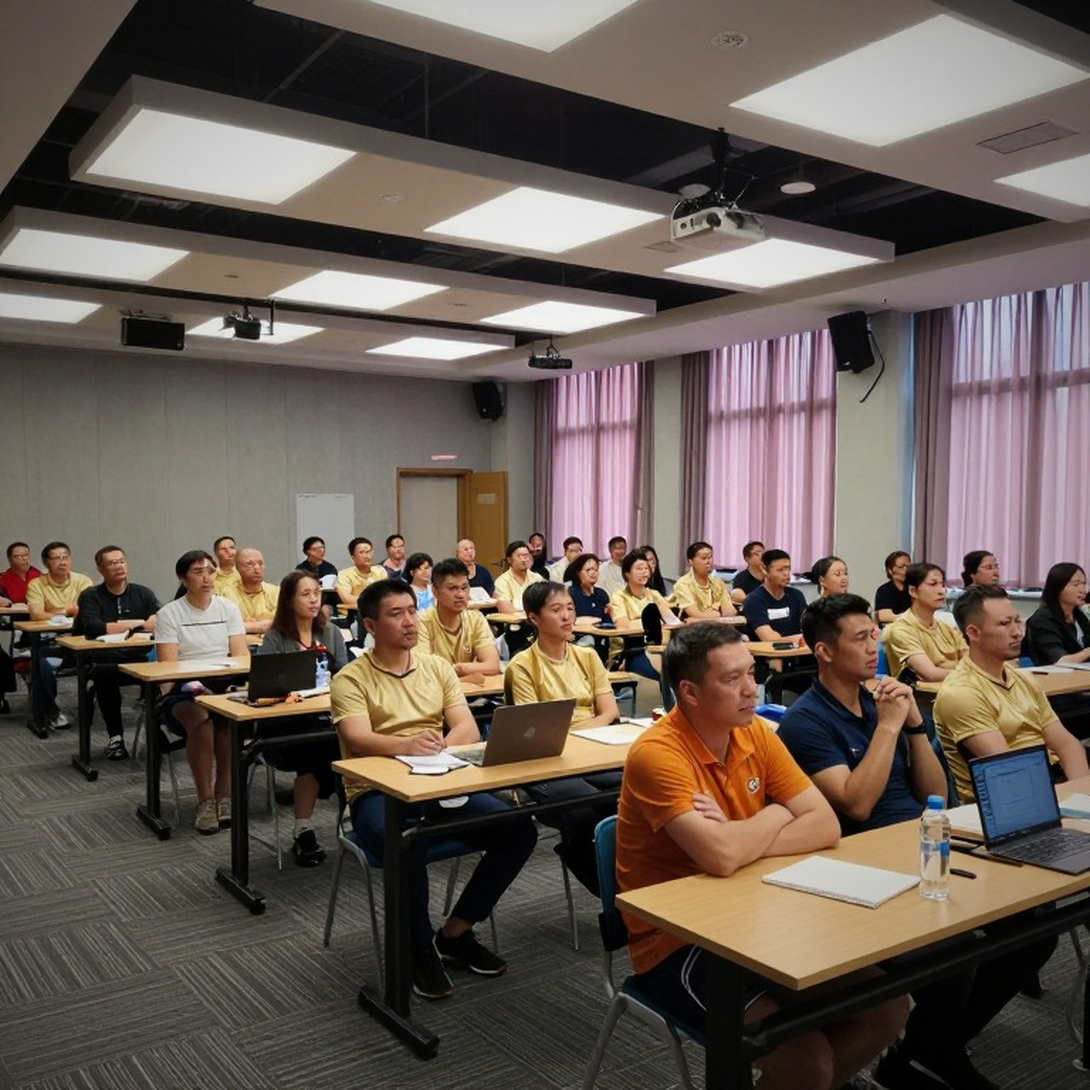
But Aidil reached the finals of the Indonesia Masters II 2026 and the Al Ain Masters 2026. He knows what it feels like to stand in the last match of a tournament, to lose there, and to return to training afterwards. That is a type of data that never appears in rankings but always appears in results.
Every number carries a signature, and every signature carries a timestamp. Aidil's signature here belongs to a player who has touched the final threshold three times in two years and finally converted the third. Had he lost this final too, the story would have been "a player who cannot close". Because he won, the story became "a player who has completed himself". The data sits between those two narratives, and it does not change.
His final-to-title conversion rate — three finals, one title — is roughly 33%. With a sample of three, the 95% confidence interval stretches from near 1% to near 90%. In other words, three finals is far too few to conclude whether Aidil wins finals or loses them. The only thing we know for certain is that he keeps arriving. And at this level of badminton, arriving consistently is already a rare skill. Most players outside the top 50 never reach three finals in two years.
Why 21-14 matters more than 21-16
We have only the scoreline. No smash speed, no rally length, no unforced error rate, no net-approach count. But a scoreline is still data, and it says something if read correctly.
Aidil won the first game 21-16 and the second 21-14. The margin widened rather than narrowed. That is the classic pattern of a player who solves his opponent mid-match — either by finding a specific shot the opponent cannot handle, or by adjusting tempo to drag him into an unfavourable movement zone.
Had the scores reversed — 21-14 then 21-16 — the story would differ: usually a sign of late concentration loss, or of an opponent who found a solution with too little time to overturn it. With 21-16 then 21-14, the data leans towards Aidil controlling the match better as it progressed.
I say "leans towards", not "proves". This is scoreline inference, not rally-level analysis. Low confidence. But it is the only signal available, and ignoring it is its own kind of error.
The firmer point: Aidil did not need three games. At Super 100 level, where fitness and recovery are often decisive because support teams are thin, closing in straight games carries compounding value for the following week. A 75-minute three-game final can cost a player two days of recovery and directly affect the next tournament.
Tactics are only the surface story; data is the underlying structure. Here, the underlying structure is this: a player reached a final, met the top seed, and finished the job in 42 rallies. There is nothing glamorous in that number. But it is the number of someone who knows what he is doing.
The counterintuitive angle: this is a decline indicator, not a growth indicator
Now to the part where the data forces me to argue against most of the headlines.
The story being told is this: Malaysia has a new World Tour champion, a young player is rising, a badminton nation has found its next factor. That story is not factually wrong. It reads wrong.
Place two facts side by side. Malaysia's most recent men's singles World Tour title before Aidil: Lee Zii Jia, Australian Open 2026, Super 500. Malaysia's most recent men's singles World Tour title after Aidil: Vietnam Open 2026, Super 100. Same country, same discipline, and the ceiling has just dropped a tier.
That is why I read the "two years three months" figure differently. The 820-day gap is not a meaningless silence that Aidil has just filled. It is the output of a shrinking development system. If Malaysia had five men's singles players inside the world's top 60, going 820 days without a title would be far less likely, because the probability that at least one of five players wins something over 27 months is very high.
One player, one title, two years and three months. That division says nothing about Aidil. It says everything about everyone else.
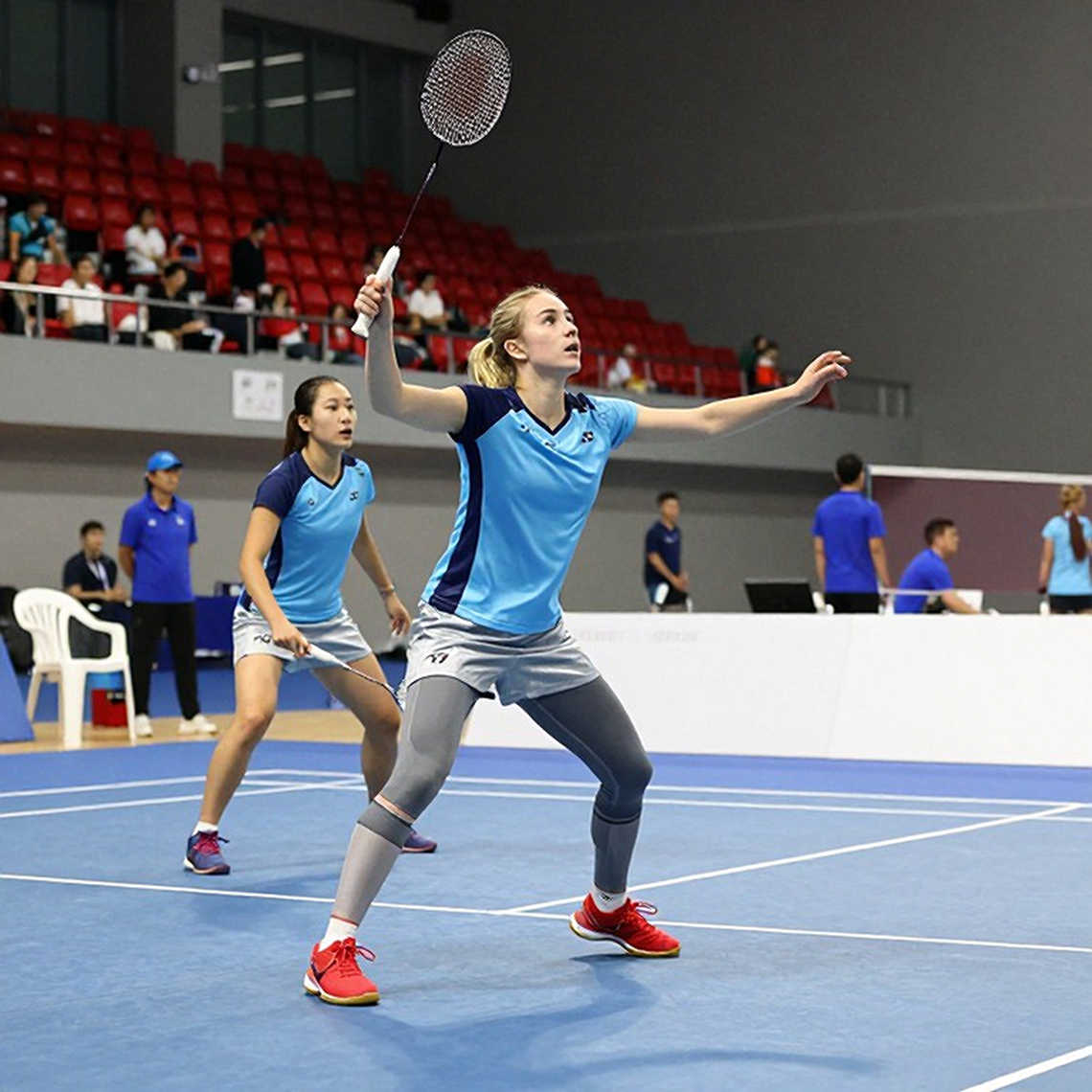
And one detail cuts sharper. Lee Zii Jia — widely treated as Malaysian men's singles' sole pillar — lost in the second round of this very tournament to Zhe Ying Wu, an unseeded opponent. Same week, same arena, same court surface. One man reached the final and won. The other went home after two matches.
There is a trap I have to warn myself about. Lee Zii Jia's early exit and Aidil's title in the same week create a deeply attractive narrative of succession. But correlation is not causation, and one week is not one season. At Super 100 level, draw quality is far lower than at the events Lee Zii Jia normally enters, where he meets top-10 opponents as early as the third round. Comparing the two results without normalising for opponent quality is a methodologically invalid comparison.
What the data permits me to say: Malaysia currently depends on a single player at the top tier, and has just added one player at the bottom tier. What the data does not permit me to say: Aidil has overtaken Lee Zii Jia.
Recovery is not linear; it is a chain of small fracture points. So is a player's career, and so, even more so, is a national badminton programme. The 820-day chain did not break at one point. It frayed gradually, through tournaments where nobody reached a semi-final, training camps short on sparring partners, and entry slots left empty because ranking points were insufficient.
The independent shuttler: the most overlooked detail
Across this entire story, the detail with the greatest structural weight is the one mentioned least: Aidil Sholeh competes as an independent shuttler.
That means he is not on the national squad roster managed by the Badminton Association of Malaysia. It means he arranges his own schedule, covers his own travel costs, organises his own coaching, and absorbs injury risk alone.
This model is not new in Asian badminton. But it remains an exception in countries running centralised systems, where young talent is absorbed into national training centres and every decision — from tournament scheduling to coaching appointments — is coordinated by the federation. In that model, resources concentrate, but slots are limited. A player not placed in the priority group gets no entry into major events, and the loop closes: no events, no points; no points, no priority.
Aidil escaped that loop by stepping outside the system. And he won.
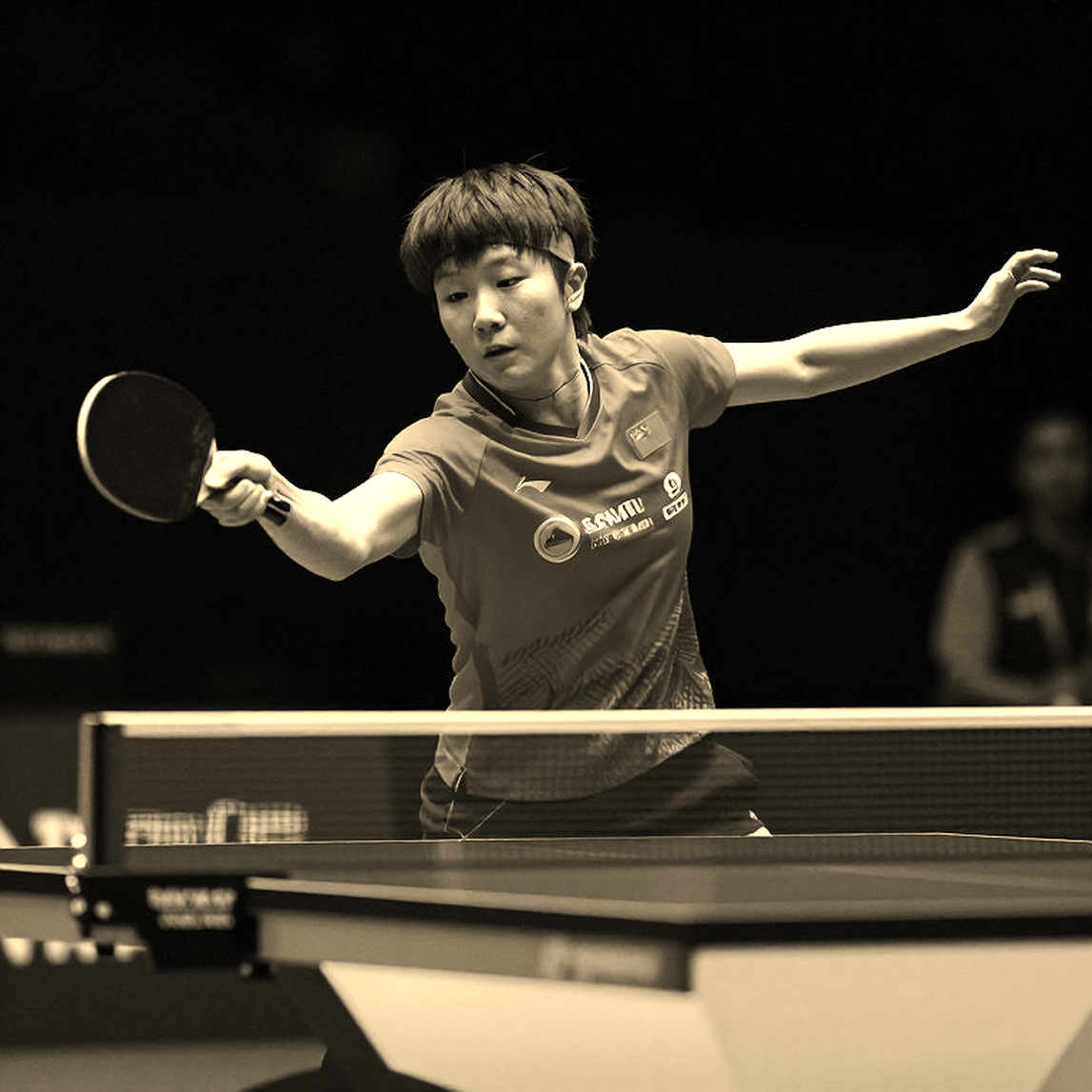
This raises an organisational question with no clear answer: how does an independent shuttler interact with national-team selection criteria for team events such as the Thomas Cup, or with quotas for the World Championships and the Olympics? If selection favours centrally trained players, a shuttler like Aidil could win a World Tour title and still miss out. If selection rests purely on results, the door opens, but questions follow about the cost of supporting someone outside the system.
I do not have enough data to answer. And that is precisely the point: a continental-level sporting event has occurred, and the rules governing its interaction with the national system remain outside media observation.
One further possibility deserves a place on the table, albeit at low confidence. The success of an independent shuttler may weaken the argument that only centralised systems produce champions. If cases like Aidil keep appearing, sponsorship money may migrate gradually towards off-system players, which would change how national federations allocate resources in the medium term.
This is a hypothesis, not a forecast. Three finals and one Super 100 title is far too thin a base to support a system-level conclusion.
The economics of the bottom rung
USD 9,000. That is the entire prize money for a BWF World Tour title.
The number matters not because it is small, but because it reveals how the sport's incentive structure operates. An independent player who wins a Super 100 receives USD 9,000 before tax and before costs. A trip to Vietnam for a player plus a coach — flights, a week of hotel, meals, entry fees — easily exceeds half that sum.
Which means at this tier, direct financial reward is close to zero. The real value sits elsewhere: ranking points, and access to higher-tier events.
Ranking points from a Super 100 title are modest. They improve a position in the rankings and may unlock main-draw entry at Super 300 events. They do not reshuffle seeding at Super 500 and above overnight. That structural fact is why players at this tier must play densely: they need to accumulate many small titles to earn one large jump.
On the market side, commercial impact is close to nil. A Super 100 title generates no broadcast rights wave, no equipment contract repricing, no investment capital shift. It generates national-scale sentimental value — and sentiment, in the short term, does not pay bills.
What is worth tracking is not the prize money but the flow behind it. If Aidil replicates the result at Super 300 or Super 500 level within six to twelve months, his commercial value multiplies, because he stops being "a Super 100 champion" and becomes "a player who can win at mid-tier". Those two labels sit very far apart in sponsorship negotiations.
Athletically, the title also marks a milestone for the tournament itself: Aidil is the second Malaysian men's singles player to win the Vietnam Open, after Roslin Hashim in 2026, nineteen years apart. That fact is real and verifiable. It must be read correctly, though: it is a fact about Malaysian participation history at one specific event, not a fact about the strength of Malaysian badminton. A country can go nineteen years without winning an event because it sends no one, or because it sends lower-tier players — not necessarily because it has weakened.
What to track over the next 12 months
Four signals will determine how this story gets retold by the end of next season.
First, Aidil's results at Super 300 and Super 500 events over his next three to five tournaments. If he reaches the quarter-finals or better in at least two of them, the "Super 100 champion" label is replaced by "genuine contender". If he exits in the first or second round, the label reverts to "one-season phenomenon".
Second, Lee Zii Jia's form. A sustained run of disappointing results turns the story from "Aidil wins" into "Malaysia is in crisis in men's singles". Two narratives, one dataset, entirely different meanings.
Third, Malaysia's development pipeline. If another Malaysian men's singles player reaches a final at Super 300 level or above within 12 months, the "decline" framing reverses. If not, it consolidates.
Fourth, and perhaps most significant long-term: how the Badminton Association of Malaysia handles independent shuttlers within its national selection criteria. A change there would be an institutional reform signal, carrying more weight than any single title.
The shot makes the decision, but the data delivers the certainty. Aidil Sholeh made his decision across two games in Ho Chi Minh City. The rest of the story will be written in numbers that do not yet exist — and at this level of world badminton, those numbers always arrive later than the applause.