
Vietnamese Swimming and the Analyses Built on Belief
**Core answer:** Phân tích bơi lội Việt Nam thường thiếu dữ liệu chia đoạn. Ban tổ chức giải quốc gia chỉ công bố thời gian chung cuộc, trong khi World Aquatics công bố đủ thời gian từng 50m và phản xạ xuất phát. Kết luận kỹ thuật không dựa trên sáu lớp dữ liệu nền đều là phỏng đoán, kể cả khi trình bày dài và tự tin. **Key facts:** - World Aquatics công bố thời gian từng 50m, phản xạ xuất phát và đoạn đua cuối trong kết quả chính thức. - Giải bơi quốc gia Việt Nam thường chỉ công bố thời gian chung cuộc, đôi khi thiếu cả heat sheet. - Phân tích một đường bơi cần sáu lớp dữ liệu: phản xạ, chia đoạn 50m, quay vòng, tần số quạt, quãng đường chu kỳ, tốc độ 15m cuối. - Kình ngư 200m tự do nam bơi 50m đầu nhanh hơn kế hoạch 1,5 giây thường mất lại 2 đến 2,5 giây ở 50m cuối. - Chấn thương vai do quá tải và đầu gối bơi ếch tích lũy qua hàng nghìn chu kỳ quạt tay, không đến từ va chạm. **Source attribution:** Báo cáo phân tích chuyên sâu giai đoạn 2, tài liệu nội bộ ngành thể thao; dữ liệu chuẩn nền đối chiếu với tiêu chuẩn công bố kết quả của World Aquatics | Cross-checked: VuaBong.vn **Related Q&A:** Q: Vì sao phân tích bơi lội Việt Nam khó kiểm chứng? A: Vì kết quả công bố chỉ có thời gian chung cuộc, không có dữ liệu chia đoạn để đối chiếu. Q: Thiếu dữ liệu chia đoạn gây hậu quả gì? A: Mọi kết luận về chiến thuật và chấn thương đều thành phỏng đoán, dẫn tới đổ lỗi sai cho tâm lý hoặc thể lực. Q: Cần tối thiểu bao nhiêu lớp dữ liệu để phân tích một đường bơi? A: Sáu lớp, gồm phản xạ xuất phát, chia đoạn 50m, quay vòng, tần số quạt, quãng đường chu kỳ và tốc độ 15m cuối.
Vietnamese Swimming and the Analyses Built on Belief
An analysis of a Vietnamese swimmer's performance at the SEA Games was shared more than four thousand times in two days. The piece ran six sections, carried charts, included photos, and closed with confident claims about a "superior physical foundation" and "race intelligence that has reached continental level". Across the entire text there was no first-50m split, no reaction time off the blocks, no turn speed, no stroke rate, and no link to any official results sheet.
I opened the organiser's results file. It contained exactly one column: the final time. Everything else in that analysis was built from the feeling of watching live and a few vertical clips on social media. The fault sits with an industry habit, not with one particular writer. Vietnam's sports-writing culture trains people to describe emotion, not to demand data before putting pen to paper.
At Lach Tray I learned to read injuries from the first numbers. Only when I moved across to covering swim meets did I understand how severe this sport's data deficit is in Vietnam. A single V.League round still produces running distances, pass counts, and duel counts. A national swim meet sometimes returns nothing but a list of final times, occasionally without even the preliminary heat sheets.
World Aquatics publishes results with full 50m splits, reaction times, and closing-segment data. That is the baseline. When a swimming nation has no baseline, every technical conclusion becomes a decorated guess.
Analysing a lane requires at least six data layers: reaction time off the blocks, each 50m split, turn time measured from 5m in to 5m out, stroke rate, distance per stroke cycle, and velocity over the final 15m.
In Vietnam, the first two layers appear only occasionally. The remaining four essentially do not exist in published documents. Yet the volume of analysis writing still rises every SEA Games season, and most of it draws conclusions about the four layers that do not exist.
Based on my experience following swim competitions, I once joined a training-load monitoring group for swimmers. The workflow had four fixed steps. First, collect every split from the electronic timing system. Second, cross-check the official results, the coach's records, and video footage against one another. Third, strip out every noise factor, including drafting, lane current, and a compressed schedule. Fourth, conclude only when the data from the first three steps agree.
The third step is the one public writing skips most often. A swimmer two seconds off a personal best could be carrying ten different causes: a mild illness, poor sleep, lane one sitting near the pool wall, or simply a pacing decision to save energy for the next event in the same session. An analysis built on feeling will grab the most dramatic cause available.
Take pacing distribution. A male 200m freestyle swimmer who goes 1.5 seconds faster than plan over the first 50m typically gives back 2 to 2.5 seconds in the last 50m. That is an energy-exchange rule verified at every level, from junior meets to the Olympic Games. Without split data, a writer cannot distinguish a tactical error from a physical ceiling. And when the distinction cannot be made, the default label becomes psychology.
The body is a closed system, but data is the key that opens it. In swimming that closed system is tighter than in football, because athletes never make contact with an opponent. Every cost comes from the distance they swim themselves. If you cannot count the distance and cannot measure the volume, there is no way to trace a shoulder or knee injury back to its source.
In swimming, overuse shoulder injuries are the most common group, followed by knee injuries in breaststroke. Both share one trait: they accumulate silently across thousands of stroke cycles rather than arriving from a single collision. An article claiming a swimmer's form dropped because of a shoulder injury, without weekly volume figures and without the number of consecutive high-intensity sessions, is retelling a story rather than offering a diagnosis.
Every fall has a graph, and every graph has a break point. The problem for Vietnamese swimming is that we usually have the break point without the graph.
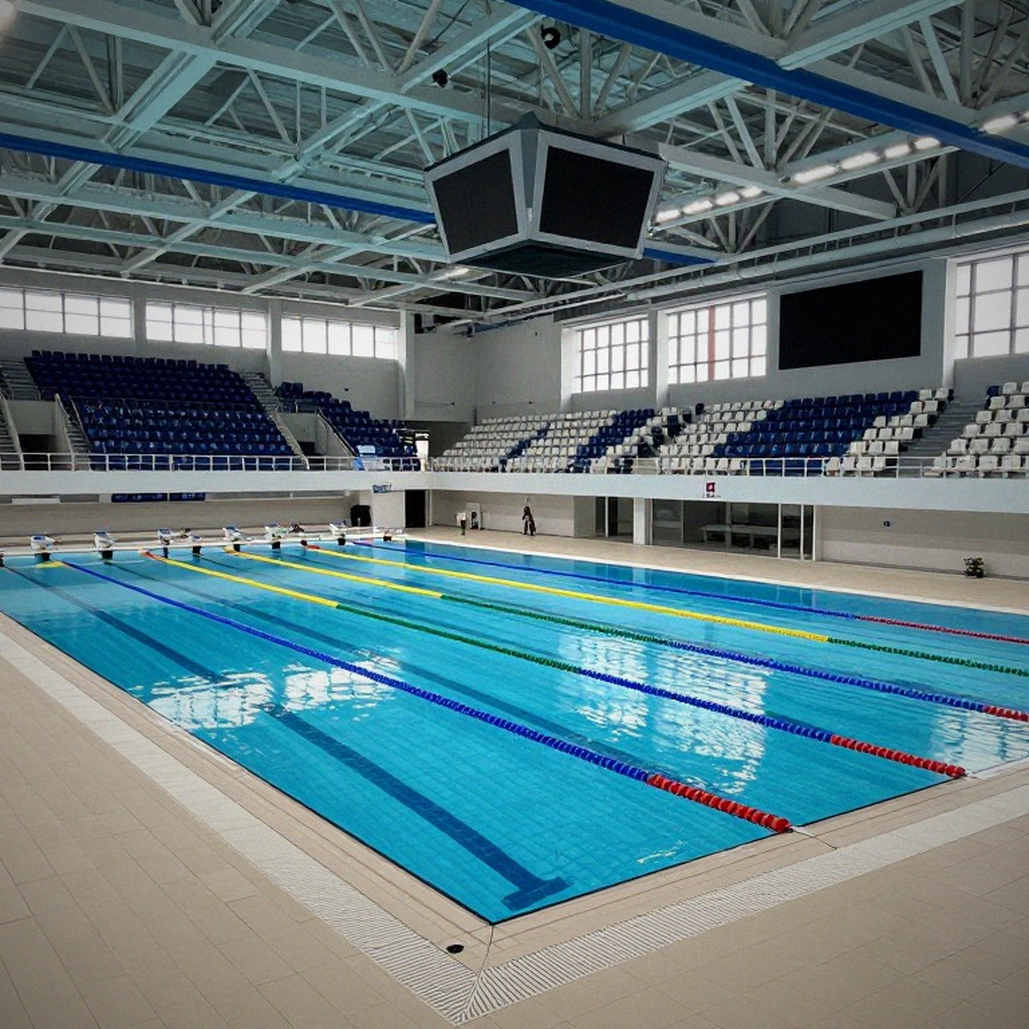
I once reconstructed a season for three young swimmers by hand-timing every 50m split from video, because the meet's timing system did not publish split data. Three swimmers, seven sessions, two events each. When I finished, I had a very clear picture of how they distributed speed, where they lost time in the turns, and how much they faded over the closing 50m. None of that picture could have been inferred by sitting in the stands and recording impressions.
Split data is also the only tool for fair comparison across generations. Nguyen Thi Anh Vien dominated Southeast Asian lanes for nearly a decade. Nguyen Huy Hoang took bronze in the 800m freestyle at the 2026 Asian Games. Those two milestones sit in different eras of Vietnamese swimming, and the only serious way to understand them is to place their 50m splits side by side rather than placing praise next to praise.
From Moscow to now, I have never seen a sporting nation escape analytical decline while running on missing data. Vietnamese swimming is not outside that rule.
The popular belief in sports media is that more analysis equals more professionalism. The operation runs the other way. A 3,000-word analysis built on empty data does more damage than a short news item carrying a split table. The long version manufactures false certainty, and false certainty travels faster than statistical error.
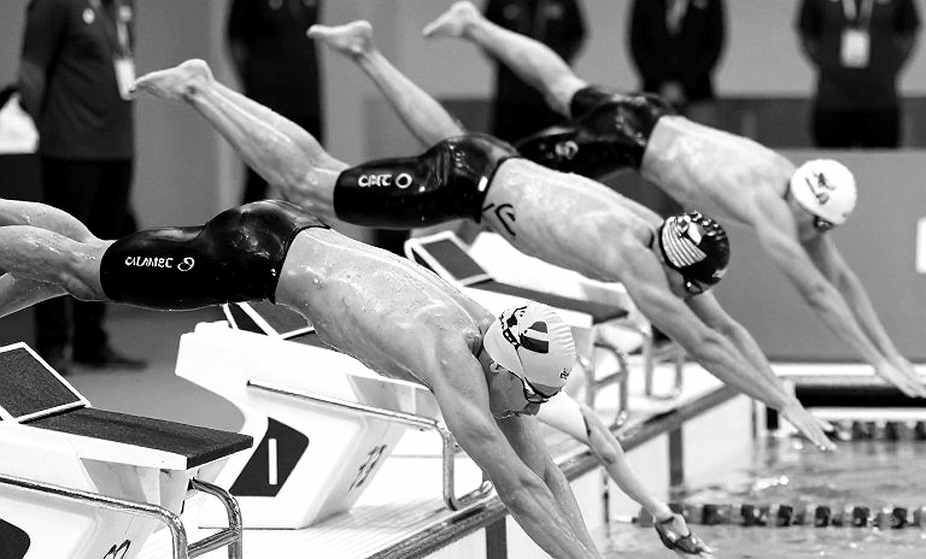
The second consequence is misplaced blame. When every failure is explained by weak mentality or a lack of international experience, we never reach the real cause, which usually sits in pacing distribution, the transition between heats and finals, or a compressed schedule. This is the kind of conclusion reached first, with the evidence hunted afterwards.
The third blind spot is more troubling: silence gets read as incompetence. In my work, the answer "not enough data to conclude" is a valid outcome and often the correct one. An analyst who refuses to judge a swimmer's shoulder injury without a training diary is doing the job properly, not dodging it.
Rushing breaks things. That holds for an athlete's body, and it holds for an analyst's credibility. A conclusion published three days early can devalue three years of subsequent data, because nobody trusts the baseline anymore.
The work ahead is not about writing better. It is about setting a minimum requirement: every swimming analysis must carry at least one verifiable number with a source. National meet organisers should publish split data as a default part of the results rather than treating it as internal material.
If Vietnamese swimming holds that habit for five years, we will own a data archive thick enough to answer questions that today can only be answered qualitatively: why a generation of swimmers slows after the age of twenty, why shoulder injuries recur within certain coaching groups, and why some of our events advance while others stand still.
Numbers stay silent, but their sequence always knows how to tell a story. The writer's job is to read that sequence before retelling it.